Science / Biology
The Achievement of Cloning
By: Professor Ahmedullah Qureshi Published Feb 02, 1998

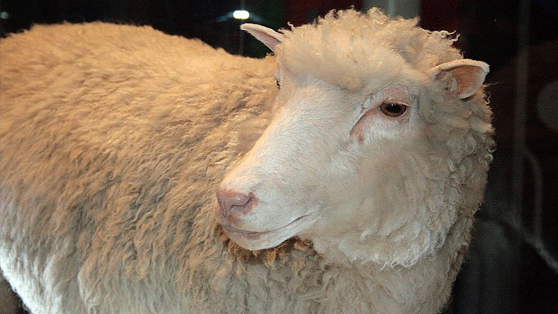
“Dolly,” the sheep, is being hailed as a truly extraordinary milestone in the history of asexual reproduction. However, upon closer examination, there appears to be nothing exceptionally novel about the role played by genes or chromosomes in this process. The reality is that the mammary gland tissue taken from the first pregnant sheep already contained a full, diploid 2n set of chromosomes. This sheep itself was born through the conventional process of sexual reproduction, that is, the fusion of male and female gametes. In other words, the chromosomes in the mammary tissue were naturally present in a complete set, carrying all the usual genetic traits of a typical sheep. To put it simply, this was a case where the honeymoon took place first and the wedding ceremony was held afterward.
What is a Clone?
“A clone is a group of animals or plants produced artificially from the cells or cuttings of an ancestor, and is identical to that ancestor in every way”
In the definition above, one flaw in my view is the emphasis on the word artificial. Consider the common plant Bryophyllum, also known as the sprout-leaf plant in English and Patthar Chat in Urdu. Its leaves are serrated, as shown in the figure, and when an old leaf falls onto soil, or when a leaf is simply pressed against soil, new vegetative buds sprout along its edges. From these buds, tiny roots grow downward into the soil while tiny leaves grow upward. Eventually, one leaf can give rise to many new plants. This is an example of cloning that happens naturally. Asexual reproduction also occurs naturally in many lower animals.
For instance, in protozoans like Paramecium, asexual reproduction takes place rapidly and continuously as part of their life cycle. The same is true for creatures like Hydra, Vorticella, Planaria, starfish and earthworms, which reproduce through budding and cuttings, either naturally or artificially. Even crops like sugarcane and roses are cultivated this way in our gardens and farms.
However, higher animals such as birds and mammals reproduce exclusively through sexual reproduction, where two distinct cells, sperm and ovum, must fuse to create a new life. Only after this fusion can an embryo begin to grow. But at a very early stage, when the embryo is just a tiny ball of about 32 cells, known as a morula, if it accidentally or deliberately splits into two halves and both halves continue to grow normally in the mother’s womb, the result is a pair of identical twins, also called homozygous twins. Both come from the same fertilized egg, known as a zygote, and are genetic duplicates of one another, in other words, natural clones.
In Dolly’s case too, the cloning process involved transferring the nucleus of a mammary gland cell into an enucleated ovum, then implanting this reconstructed embryo into the womb of a surrogate sheep. After successfully overcoming various technical challenges, this first-of-its-kind feat, the birth of a genetically identical sheep, took the world by storm and is rightly celebrated as a landmark in biological science.
The following article first explores the process of asexual reproduction in Paramecium and then goes on to shed further light on the methodology of cloning and its outcomes.
Natural Cloning in Paramecium
As the preceding discussion has already suggested cloning is by no means a new concept. Nature has been producing entire generations by this very method for millions of years. What Ian Wilmut achieved with Dolly the sheep differs in a few significant ways from this natural process and we will explore those differences with a few examples.
In lower order unicellular organisms like Paramecium the standard mode of reproduction is asexual. Everyone is familiar with the process. When asexual reproduction takes place the micronucleus of Paramecium divides by mitosis into two daughter nuclei. This is followed by cytoplasmic division. The chromosomal material and its number remain unchanged. Both the mother and the two daughter cells remain diploid (2x) with no male or female pronuclei involved at any stage. This is the straightforward process through which this microscopic organism propagates its species. It is cloning in its most natural form.
If we continuously renew the culture medium for example replacing aged hay infusions with fresh ones this cycle can continue across many generations until senile decay eventually sets in. At that point the organism must resort to a different reproductive process called conjugation which restores nuclear vitality. This also underscores an important point. Compared to asexual reproduction sexual reproduction holds an evolutionary advantage.
Following conjugation and nuclear reorganization Paramecium resumes its usual mitotic cycle creating successive generations or clones of the same genetic material as long as no external factors like radiation or other natural or artificial agents introduce chromosomal changes.
A second example is the aphid or greenfly a notorious pest that wreaks havoc on crops. In this species multiple generations also reproduce clonally though in a quicker more straightforward manner. Here the so-called stem mothers produce successive generations of nymphs without mating. These nymphs all females grow up to repeat the process without fertilization. This parthenogenetic cycle can produce several generations in a single season.
Yet there is a key difference between aphids and Paramecium. In aphids’ chromosomal material is haploid (x) as this form of reproduction known as virgin birth or parthenogenesis bypasses the fusion of male and female gametes entirely. Even queen honeybees if not fertilized by a drone will produce male drones by this process alone. Female bees normally carry diploid (2x) chromosomal material resulting from fertilized eggs while unfertilized eggs produce haploid (x) drones.
The important distinction between Dolly the cloned sheep and a drone bee is chromosomal. Dolly was created from a diploid (2x) nucleus fully equipped with the chromosomal set of a typical sheep. Drones by contrast possess only a single set of chromosomes (haploid). Our earlier article on the virgin birth of Jesus also noted that parthenogenesis the miraculous conception by divine will is impossible in higher animals without the fusion of two gametes. Lower organisms and plants often propagate by fragmentation as well a process that also retains the full diploid set. Consider the banyan tree. Even a small piece of its root if left intact in soil or crevices will eventually grow into a new full fledged tree.
In all these examples the concept of cloning holds true. Whether by natural means such as parthenogenesis and budding or through artificial processes like the one that produced Dolly cloning is fundamentally about creating new individuals genetically identical to their ancestors except where outside factors cause variation.
The cloning of Dolly the sheep which is being celebrated as a triumph of genetic engineering and the creation of a clonal lineage reveals no extraordinary role played by genes or chromosomal carriers. One of the most remarkable aspects as described in reports is that Dolly was created without the direct fusion of male and female gametes. Even though newspaper accounts suggest that only the male cell was eliminated from the process the deeper reality is more nuanced.
The donor ewe sheep number one from which the mammary gland tissue was taken already carried a full set of diploid 2x chromosomes. This ewe like any other sheep was conceived and born through the usual sexual process that is the fusion of gametes. In other words, the chromosomal makeup of this donor tissue was no different from that of a fertilized egg it was already equipped with a full set of male and female chromosomal contributions each with its regular genetic characteristics.
While this donor cell was never technically referred to as a zygote probably for strategic reasons it essentially performed the role of one. That is because the fertilization that normally occurs between male and female gametes had already taken place long before inside the donor sheep itself. It would not be wrong to say that in this case the honeymoon had already happened, but the wedding ceremony was held later and the resulting birth was publicized in February 1997 by Nature magazine.
The cells extracted from the mammary gland of donor sheep number one let us call her D.S.1 could themselves be thought of as preformed zygotes or substitute zygotic cells. Calling these cells a zygote or an artificial gamete is accurate in every sense. In Dolly’s case aside from the two parental contributions there was also a third participant a host cell. This was an unfertilized ovum obtained from the ovary of another surrogate sheep. The ovum’s nucleus which contained a single set of X chromosomes was removed. Researchers had already borrowed the entire chromosomal DNA from D.S.1’s 2x donor cell using it as a complete artificial zygote.
Characteristics of Undifferentiated Udder Tissue
All mammary glands share a particular structure. The undifferentiated cells within them can transform into a new form much like the sebaceous glands in the skin that produce oil. Under the influence of certain hormones these cells rearrange into alveolar glands or racemose glands grape-cluster-shaped structures and begin producing milk. In my view one could also derive this material from cells present in the lower layers of the skin such as oogonia the Malpighian layer or spermatogonia. The early structure of these racemose glands is like a blastula and under the action of pituitary and other hormones they undergo rapid division much like the cleavage stage of embryonic development.
In the case of Dolly, the sheep a key innovation was the researcher’s clever selection of these undifferentiated or semi-differentiated cells from a pregnant ewe just before it was about to give birth. Initially they froze the tissue using the in vitro fertilization technique and cryopreserved it to slow or halt its cell division. Next an unfertilized ovum was taken from an intermediate donor ewe we can call her ID.S.II and its nucleus containing X chromosomes was removed. Contrary to what newspaper reports claimed that only the male nucleus was removed it was the female nucleus that was extracted.
Then the substitute gametic cell containing the full 2x chromosomal set was carefully introduced into the enucleated ovum under a microscope and fused with it. This entire process was conducted in a Petri dish under in vitro conditions. To facilitate successful fusion between the enucleated ovum and the donor cell a gentle electrical pulse was applied. This created an artificial zygote a cell equipped with all the required chromosomal material and cytoplasm provided by the ovum to nourish and grow.
Here it is not specified whether only the donor cell nucleus was retained or the entire donor cell minus its outer membrane was fused into the enucleated ovum. A significant difference between traditional IVF and Dolly’s cloning process is that in IVF fertilization takes place between one male and one female gamete whereas here a fully diploid cell was implanted into an enucleated ovum.
The most challenging part of this process was selecting a host ovum that would minimize immune rejection which is why a ewe of the same breed was chosen and one whose cytoplasm could support the substitute zygotic cell adequately. To complete the fusion microsurgery was performed to introduce the donor nucleus into the host ovum followed by another gentle electrical pulse to encourage the two cells to unite.
This was by far the most difficult stage of the operation. Following this the artificial zygote was nurtured in vitro under controlled temperature and nutrition and additional electrical stimulation prompted the zygote to undergo cleavage. Researchers conducted a total of 277 such experiments of which only 29 substitute zygotic cells successfully began cleaving. Out of those 28 failed and only one survived. This successful embryo was implanted into the uterus of a surrogate ewe let us call her surrogate mother number III and was closely monitored with hormonal treatment and expert gynecological care.
After all these painstaking efforts the researchers finally succeeded in bringing Dolly into the world a true gift of modern science. The success rate was only 1 in 277 which equates to approximately 0.0003 percent a remarkably low percentage that underscores the complexity and difficulty of this achievement.
It is important to draw attention to an early twentieth-century event involving a Russian biologist who was studying dogs and their conditioned reflexes. He began training mice to respond to the sound of a bell by going to the food plates. Initially, after about a hundred lessons, he noticed that on the hundred and first trial the mice, upon hearing the bell, would even rush to empty plates. The second generation learned this behavior by the ninety-ninth trial, the third generation in fewer trials, the fourth even fewer, and by the fiftieth generation the mice would run to the plates after hearing the bell only a few times. This researcher, Pavlov, demonstrated that certain behaviors could be inherited according to Lamarck’s theory of the inheritance of acquired characteristics.
Psychologists and zoologists in Western countries studied this research with great interest and tried to replicate the experiment in their own laboratories, but the results were negative every time. This caused considerable debate in scientific circles. For this reason, we should grant full acceptance of Ian Wilmut’s achievements only after further experimental verification. With due respect to Wilmut, when it comes to embryonic cells—such as the morula stage consisting of about thirty-two fertilized cells or any part thereof—the transplantation of such cells into the uterus of a nursing female of the same breed has been successful. Cows and goats of this kind have already been produced. Therefore, it would be unfair to dismiss Wilmut’s experiment outright.
Now the question arises: could the entire process have been accomplished using just one ewe? That is, taking undifferentiated cells from the mammary gland of a single pregnant ewe and transplanting them into her uterus by Wilmut’s method. Both methods only produce female clones, but if the experiment is carried on for many generations, there is a risk that the genetic material, such as DNA, will deteriorate due to senile decay and become less viable. To rejuvenate the clone, it would be necessary to take fresh cells from suitable sheep tissue. Since each cell in this tissue carries XY sex chromosomes, any clone derived from it would consist only of male sheep.
Could an even more interesting scenario be created by obtaining suitable human tissue cells and implanting them into a cow’s uterus? This would first require overcoming immune rejection of the foreign tissue. Secondly, the difference in gestation periods between species would have to be addressed by developing methods to manage it. Artificial induction of labor and labor pains would be necessary to deliver the cloned human. Would religious and public opinion raise objections to producing human clones in this way and transplanting their organs?
Another remarkable incident
In a contemporary national journal, a curious story related to cloning was shared, which, in my humble opinion, seems hard to believe. It involved experimental treatment for a woman’s infertility. Doctors used frozen reproductive cells—note, the original author referred to them as “reproductive cells,” while the more accurate term would be early embryonic cells. The process involved rubbing a single cell with a glass rod in the laboratory to make it easier to implant into the uterus. To the doctors’ surprise, three weeks later, they discovered that this rubbing had caused the single cell to split into two embryos. As a result, a four-year-old boy is now living with his parents and an identical twin brother in southern Belgium.
In our view, this was not merely a single sperm cell but rather a very early-stage human embryo, most likely at the early morula stage—consisting of 16 to 32 cells—that had undergone cleavage. The rubbing caused it to split into two parts, each developing into an identical twin. There is nothing truly astonishing or inexplicable about this event to call it extraordinary. In fact, what is more surprising is the simplicity with which the embryo was reportedly transplanted into the uterus.
Even if we accept that “reproductive material” meant sperm cells obtained from a man and inserted into the uterus where normal fertilization (fusion) occurred to form a zygote, which then began cleavage, the initial embryo would have split, eventually producing two identical twins. As far as the author’s limited knowledge goes, the embryo at the early stage is transferred to the mother’s uterus in all cases of test-tube baby births. Thus, there is no reason for astonishment or disbelief in either case.
Dr. Wilmut’s pioneering accomplishment undoubtedly involved significant investment and time. Perhaps when this method is commercialized and developed into a full-fledged industry many of the current challenges will be resolved. So far Dolly the sheep was produced with the help of three female sheep whereas naturally a single ram mates with one to three ewes resulting in offspring.
Through vivid imagery natural cloning has been demonstrated in organisms like Paramecium and the plant Bryophyllum. Such cloning occurs commonly among lower animals and ordinary plants, but nature has not favored this process for higher animals. This is because sexual reproduction introduces variation essential for the survival and evolution of species.
There is an English saying that “life itself is a miracle”. Scientists now aim to achieve the extraordinary feat of producing offspring solely from cells carrying either the X chromosome or the Y chromosome without the fusion of male and female nuclei thus generating haploid generations. Humans appointed as God’s vicegerents on Earth are certainly capable of such wonders. While polyploidy has been successfully employed to cultivate plants could haploidy not enable similar breakthroughs? Aphids and honeybees after all have naturally reproduced this way for centuries. Perhaps even sheep might.
While the above methods seem to raise fewer ethical religious or social objections complex questions arise when cloned organs like kidneys brains corneas or hearts are transplanted into other individuals. The donor clone might become a mindless being devoid of intellect and soul. Could such a clone ever compose poetry like the great poet Biddil or write heartfelt praises of the divine? The famous saying goes that courage and great deeds require heart and kidneys. Such a clone may not even be able to compose poetry. Imagine the chaos if the brain of a donor clone were simply filled with straw.
Consider the dilemma of a woman frustrated by infertility due to defects in her husband’s semen who uses tissue from an unrelated man to conceive a male child in her own womb. What verdicts would religious scholars of the People of the Book and our own Islamic jurists pronounce on such a matter?
The text also discusses advances in overcoming issues related to tissue compatibility and gestation periods. These breakthroughs might one day enable simultaneous transplantation of multiple human tissues into the wombs of cow’s buffaloes and elephants potentially resulting in several humans being born from a single elephant. Similarly, half a dozen sheep or goats could be produced simultaneously. Even more fascinating tissues from various European breeds could be transplanted into an African elephant’s womb possibly resolving the scarcity of that species.
Another question naturally arises will humans eventually reproduce without requiring specific male and female contributions? Will both sexes willingly forgo the pleasures of intimacy? How long can a healthy person subsist on thin artificial nutrition delivered via drip? Can this fulfill natural hunger and desire?
The fulfillment of hunger is more than just food intake it involves the aroma the touch of fingers the pleasure of chewing the feeling of fullness the refreshing coolness of water the warmth or chill of food and the lively conversations around the table. Similarly sexual satisfaction is vital for the physical and neurological health of individuals young middle-aged and elderly alike. Nearly every society and religion has acknowledged and permitted lawful means for fulfilling this need. Marriage is regarded as a moral and social necessity. Islam for instance emphasizes marriage through the Prophet’s teaching that those who neglect marriage without excuse are not among his followers. The Quran in Surah An-Nur verses 31 and 32 also stresses the importance of marriage.
The investment in cloning technology is enormous and success rates remain low. Early experiments involved freezing and hibernating semi-differentiated tissues aided by chemical and hormonal treatments. Implanting these early embryos into substitute mothers may shorten the process though this remains speculative.
Cloning has naturally occurred in lower unicellular and acellular organisms’ plants and simple animals for eons. However, nature has not favored this method for mammals and higher animals primarily because cloning eliminates the natural opportunity for genetic variation a vital aspect of sexual reproduction that mixes the DNA and RNA of both parents. Furthermore, nature produces offspring through haploid reproductive cells such as X chromosome-carrying ovum cells in bees and aphids. Can humans replicate this divine creative act in mammals?
Sometimes I seek the joy of union, sometimes the pain of separation. The pleasure of union is not only linked to the refined emotions and feelings of humans but is also deeply embedded in the very life force of creatures with lesser intellect, especially birds, right down to their veins and nerves. Therefore, in my humble opinion, this method should remain confined to a very limited circle of animals only. Humans are largely unfamiliar with the language and emotions of animals and often perform experiments on them that they would never consider acceptable for themselves. It is possible that someday, an advocate for animal rights will emerge from among humans and succeed in passing legislation to prohibit such unnatural methods of animal reproduction. It is heartening, however, that some countries in America and Europe have already imposed bans on human cloning.
The bottom line of this entire debate is that Dr. Wilmut’s efforts are not only exceptionally intriguing but also represent a remarkable scientific breakthrough. Yet, further trials must be conducted elsewhere because out of 277 attempts, only one succeeded, a success rate of just 0.003 percent. This success involved the morula stage or a part of it, which, when implanted into the womb of a nursing female of the same species, resulted in successful pregnancies. Such cloned cows and goats have already been born. Hence, doubting Dr. Wilmut’s experiment would be unfair.
The question now arises: couldn’t the experiment have been done using just one single ram? Meaning, why not implant the cell obtained from the testicle of the same ram into the womb of the ewe using Dr. Wilmut’s method? Both approaches only produce female clones, but if the experiments continue generation after generation, there is a real risk that the genetic material, DNA etc., may suffer from senile decay and lose viability. Therefore, to rejuvenate the clone, a suitable tissue sample must be taken from a healthy sheep. Since every cell in that tissue contains XY sex chromosomes, the resulting clones will all be male.
Natural cloning is observed in lower animals and common plants but is not deemed suitable for higher animals by nature because sexual reproduction introduces genetic diversity, which is essential for life. There is an English saying: “Variety is the spice of life.” Now, science seeks to achieve something extraordinary, producing haploid offspring from only X or Y chromosome-bearing cells without the fusion of male and female nuclei. Allah has appointed humans as His vicegerents; surely, He has given us the capacity to achieve this. Polyploidy has already been used to develop plants, so why not haploidy? Aphids and honeybees have been naturally reproducing this way for ages. Even a “Nirally” sheep might be produced similarly.
Though these methods raise fewer ethical, religious, and social objections, what if organs such as kidneys, brains, corneas, and hearts from cloned individuals were transplanted into wealthy recipients? The donor clone would become like Bedil, a poet without a heart or brain, unable to compose verses praising the Almighty or the Prophet. As the famous saying goes, courage and hard work require both heart and kidneys. Such a clone would not even be able to write poetry. Imagine the chaos if the “upper chamber” of a cloned brain were filled with straw.
Consider the ethical dilemma if a woman, frustrated by infertility due to defects in her husband’s semen, were to use tissue from an unrelated donor to conceive a male child in her own womb. What ruling would the scholars of the People of the Book and our own religious jurists give in such a case?
The lines above also address overcoming issues like tissue rejection and gestation period, promising advances that could allow multiple human tissues to be simultaneously grafted into the wombs of cows, buffaloes, and camels. This could enable many humans to be born from a single camel’s womb, and similarly, nearly half a dozen sheep or goats could be produced from one camel. Interestingly, transplanting tissues of the European “Miss Universe” into an African camel could resolve the scarcity of that breed.
This leads to another thought-provoking question: Will humans one day become independent of the natural reproductive roles of males and females? Will both sexes willingly forgo the pleasures of intimacy? How long can a healthy individual sustain himself on drips or feeding tubes alone, deprived of the natural joys and desires of food? The aroma of food, the touch of fingers, the pleasure of tasting, the feeling of fullness, the refreshment of cold water on a dry throat, the comforting warmth or coolness of meals, the lively conversations around the dining table, all these enrich the experience of eating. Likewise, fulfilling sexual desires is vital for the physical and nervous health of young, middle-aged, and elderly people. Nearly every society and religion has safeguarded this need in a lawful manner. Marriage is regarded as an ethical and social necessity. Islam, for example, stresses this through a hadith that roughly states: “Whoever among you is able to marry but does not do so is not of my community.” The Quran in Surah An-Nur, verses 31 and 32, also encourages marriage.
How much investment and effort does this entire field require? Using references like these, some jurists have even declared marriage obligatory, and poets, including Allama Iqbal, the Poet of the East, have passionately explored the fulfillment or frustration of this desire.
Future experiments and meaningful modifications will undoubtedly require time and resources. For instance, the early embryonic sac, morula shown in Figure 13, has been subjected to freezing and hibernation, likely using tried chemical and hormonal methods. Implanting such an early embryo into a surrogate mother’s womb could significantly shorten the experimental timeline, a humble opinion of course.
Cloning has naturally existed since time immemorial, albeit primarily among unicellular and acellular organisms, plants, and lower animals. However, nature has not favored this method for higher mammals. One reason is that cloning eliminates opportunities for genetic variation, an essential feature of sexual reproduction that enables DNA and RNA exchange and diversity. Another point, as mentioned earlier, is that nature produces haploid reproductive cells, ovum, only via X chromosomes, as seen in queen bees producing drones and nymphs. Can humans replicate this divine creative act in mammals?
Another question that naturally arises is whether in the future humans will become independent of the specialized roles of men and women in reproduction. Will both sexes willingly forego the pleasures of intimacy? How long can a healthy person sustain themselves solely on intravenous or tube feeding of thin or artificial nutrition? Can such a person truly satisfy their natural desires for appetite and nourishment? The fulfillment of hunger involves much more than just consuming food—the aroma of dishes, the touch of fingers, the pleasure of chewing and tasting, the feeling of fullness, the refreshing coolness of water on a dry throat, the comforting warmth or coolness of meals, lively conversations among those seated together, and countless other subtle factors all contribute to the experience.
Similarly, the satisfaction of sexual desire is essential for the physical and neurological health of a young person, a middle-aged adult, and even an elderly individual. Nearly every society and religion has recognized this need and permitted its lawful fulfillment. Marriage, therefore, is regarded as an ethical and social necessity. Islam, for instance, stresses marriage strongly through a hadith that roughly states: “Whoever among you is able to marry but does not, is not from among us [Muslims].” The Quran, in Surah An-Nur, verses 31 and 32, also emphasizes the importance of marriage.
How much investment and effort does this entire matter require? Based on such references, some Islamic jurists have even declared marriage obligatory. Our poets, too, have written extensively about the fulfillment or frustration of this desire. Take, for example, the great poet of the East, Allama Muhammad Iqbal, who wrote:
Sometimes I seek the joy of union
Sometimes the pain of separation
The pleasure of union is not only tied to the subtle emotions and feelings of humans but also rooted deeply in the very life force of lower animals, especially birds, down to their veins and nerves. Therefore, in my humble opinion, this method should be limited to a very narrow circle of animals only. Humans are largely unfamiliar with the language and feelings of animals and conduct experiments on them that they would never consider acceptable for themselves. It is possible that someday an advocate for animal rights may emerge from among humans and succeed in passing legislation against this unnatural method of animal reproduction. It is encouraging that several countries in America and Europe have already imposed bans on human cloning.
The conclusion of this entire discussion is that Dr. Wilmut’s efforts are not only extraordinarily interesting but also represent a remarkable breakthrough. However, further trials must be conducted elsewhere because out of 277 experiments, only one succeeded—a success rate of just 0.003 percent, an extremely low figure. Scientific matters often receive little attention to time and investment. Future experiments and meaningful improvements will certainly require more time and resources.
For example, the early embryonic sac composed of semi-differentiated tissue cells, shown in figure (1), has been subjected to freezing and hibernation stages—likely through chemical and hormonal methods. If such an early embryo is implanted into the womb of a surrogate mother, the experiment might be shortened. (This is merely a layman’s opinion.)
Cloning has naturally occurred for a long time, albeit mainly in lower unicellular and acellular organisms, plants, and simpler life forms. However, nature has not deemed this method beneficial for higher mammals. One reason is that cloning eliminates opportunities for genetic variation, a vital aspect of sexual reproduction that allows continuous exchange and mixing of parental DNA and RNA. Another point, mentioned earlier, is that nature produces only haploid reproductive cells—specifically X chromosome-bearing ova—such as in bees where queen bees produce drones and nymphs. Can humans replicate this divine creative act in mammals?