Environment / Climate Change / Sustainability
Mangroves: The Lifeline of Our Coasts and a Priceless Asset to Life
By: Sameen Fatima Published Aug 01, 2025
Mangroves: The Lifeline of Our Coasts and a Priceless Asset to Life
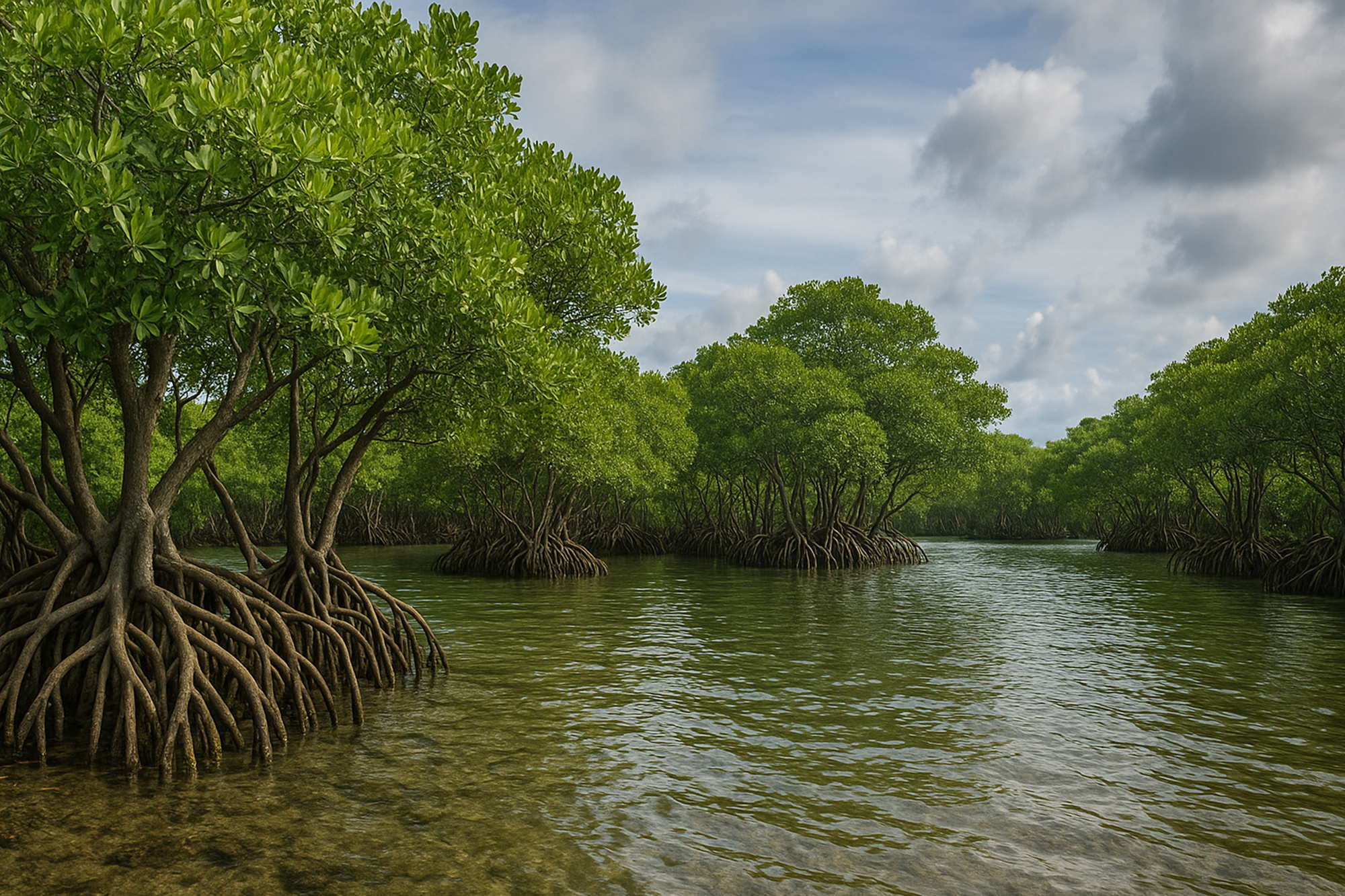
Have you ever stood at the shoreline and observed those trees quietly rooted in salty waters, spreading their roots in silence? These are mangroves nature’s marvel thriving in the harsh conditions of brackish water and soft, muddy soil. They don’t merely survive; they lay the foundation for a vibrant ecosystem. Their submerged roots, intertwined within marshy soil, teach us how life can grow and flourish even in adversity. These forests are not just collections of plants; they are the soul of one of Earth’s most essential ecological systems.
Why Are Mangroves Important? Environmental and Economic Significance
Mangroves do more than maintain ecological balance they are indispensable for both human populations and the economy.
Coastal Protection and Disaster Mitigation
Mangroves act as natural barriers, shielding coastal areas from sea storms, tsunamis, and soil erosion. Their dense root networks hold soil firmly in place, reduce the intensity of waves, and absorb excess floodwater. This process not only protects coastal communities from loss of life and property but also safeguards critical infrastructure like ports and highways. Experts estimate that one kilometer of mangrove forest can reduce wave energy by up to 75 percent.
Biodiversity Hotspot
These forests serve as vital habitats and breeding grounds for a diverse array of marine and terrestrial life. Thousands of fish species, crabs, prawns, oysters, and countless birds seek shelter, nourishment, and reproduction in mangroves. Many marine species spend their early lives in the protected environment of mangroves safe from predators and ideal for growth before migrating to the open sea. Thus, mangroves serve as a natural nursery for the fishing industry.
Carbon Sequestration
Mangroves are known as “blue carbon ecosystems.” Compared to terrestrial forests, they are far more efficient in absorbing carbon dioxide and storing it long-term in their oxygen-poor soils and biomass. Research shows mangroves can store three to five times more carbon per unit area than typical forests, making them critical in mitigating climate change.
Water Filtration and Quality Enhancement
Mangrove roots and soil systems naturally filter pollutants such as nitrates, phosphates, and other chemicals flowing in from rivers and streams. This improves marine water quality, which is essential for ocean life and provides a healthier environment for nearby human communities.
Economic Value and Livelihood Support
Mangroves are vital for the livelihoods of many coastal communities. Fishing, shrimp farming, and harvesting forest resources like honey and timber support the income of millions. Furthermore, eco-tourism linked to mangrove forests provides an additional economic boost to local areas.
Global Distribution of Mangroves: A Geographical Overview
Mangroves are primarily found in tropical and subtropical coastal zones, where average temperatures exceed 20°C and brackish water conditions exist. They are abundant along the coasts of the Indian, Pacific, and Atlantic Oceans.
Asia
Indonesia has the largest share of global mangroves. The world’s largest continuous mangrove forest, the Sundarbans, spans across Bangladesh and India and is home to the famous Royal Bengal Tiger. The Philippines, Thailand, Malaysia, and Pakistan particularly the Indus Delta also host significant mangrove ecosystems.
Africa
Mangroves are found along both eastern and western coasts, including in Nigeria, Senegal, Kenya, and Mozambique.
North, Central, and South America
Brazil is known for its vast mangrove ecosystems. They also grow along the coasts of Mexico, the United States (especially Florida and Louisiana), and the Caribbean islands.
Australia and Pacific Islands
Northern Australia and many small Pacific islands have extensive mangrove populations.
Mangroves in Karachi: A Local Perspective
Karachi, Pakistan’s largest and most densely populated coastal city, would face serious environmental and economic threats without mangroves.
Defense Against Storms and Floods
Karachi frequently experiences tropical storms and intense rainfall. Mangroves help reduce the impact of these storms and protect coastal regions from flooding and erosion acting as a natural wall of defense for the city.
Foundation of the Fishing Industry
A significant portion of Karachi’s economy relies on fisheries and seafood. Mangroves serve as nurseries where fish and prawns grow safely. Damage to these forests can directly impact fishery production, threatening the livelihoods of thousands of families.
Urban Climate and Environmental Improvement
In a large, polluted, and heat-stricken city like Karachi, mangroves act like natural “air conditioning.” They help regulate temperature, supply oxygen, and purify the air improving overall urban climate.
Land Stability
The Indus Delta, where Karachi lies, is home to one of the world’s largest arid-climate mangrove forests. These trees stabilize soil and protect coastal formations critical to the city’s geography.
Threats and the Urgency of Protection
Unfortunately, Karachi’s mangroves are under severe threat due to land grabbing for urban expansion, industrial and domestic pollution, and illegal logging. Protecting and restoring these invaluable forests is not just a matter of environmental balance it is vital for Karachi’s economic and social future. We must recognize that mangroves are more than just trees; they are a priceless asset that shields our coastlines and sustains life.
A Collective Responsibility
Mangrove conservation is a shared duty. Can we come together and take real action to protect this lifeline of our coasts?